Now it is again: Sympathetic creepy-crawlies come into the house to warm up. They spread fear and terror among ''spider hater'' humously and leave ugly stains on the wall.
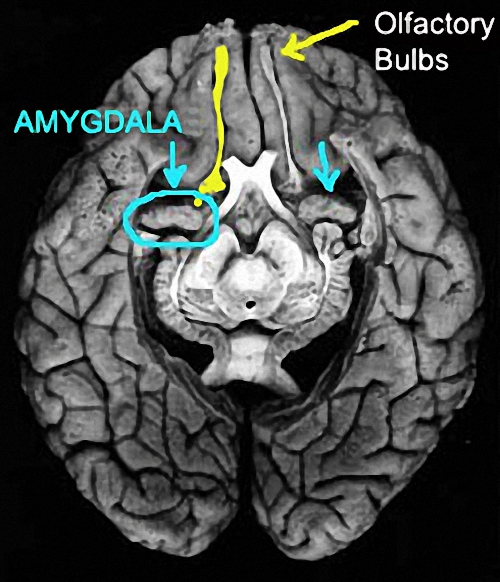
Before your contemporaries, the next eight-legged with the slippers helps the rebirth of fear in your mind. In a small part of the brain, the amygdala, t contributes to solve specific external stimuli from within a third of a second strong emotions. The body is put into higher state of alert. Noradrinalin and epinephrine are released, so that the muscle tension increases and increases the heart rate. The body prepares for fight or flight. Such reactions are referred to as stress:
Source of photo: http://www.neilslade.com/gifs/amygdala3.jpg
Before your contemporaries, the next eight-legged with the slippers helps the rebirth of fear in your mind. In a small part of the brain, the amygdala, t contributes to solve specific external stimuli from within a third of a second strong emotions. The body is put into higher state of alert. Noradrinalin and epinephrine are released, so that the muscle tension increases and increases the heart rate. The body prepares for fight or flight. Such reactions are referred to as stress:
Source of photo: http://www.neilslade.com/gifs/amygdala3.jpg
Calculated that the small spiders are able to trigger such reactions at comparatively gigantic man, has evolutionary causes. Even young monkeys are afraid of spiders and beetles. The reservation against the creatures seem to be genetically predisposed. He is to hold them in primates, insects indiscriminately cram into his mouth, because that might indeed be toxic. "Ugh spider!" So an ancient way alert program that can be eased slightly in the normal case of habituation. Despite suffering about 10 percent of arachnophobia INFECTED people worldwide, those people that get triggered in the amygdala stressful situations get out of control and there is panic attacks. These are called phobias and anxiety disorders should be treated.
For the rest of humankind is simple: the unknown species of spiders do not eat better, but hold on to dear little legs and keep people under their noses. This strengthens the circulation and releases endorphins.


